

Best Auto Glass Websites: Real Examples & The Complete Build Guide

A cracked windshield doesn’t wait for inspiration—so your website can’t either.
The auto glass category is fiercely local, high-intent, and time-sensitive. Searchers are often on a smartphone, standing in a driveway, trying to schedule mobile service before the school run or commute. Sites that win here do three things exceptionally well: make the next step obvious, prove trust in seconds, and reflect the realities of glass today—mobile service, insurance workflows, and ADAS calibration.
Across North America, millions of windshields are replaced annually, and mobile service accounts for a significant share of jobs in metro areas where commuters can’t afford shop downtime. Average ticket values rise when ADAS calibration is required, and “same-day” plus “near me” search phrases surge during commute hours and after storms. Conversion hinges on speed (page load and scheduling), clarity (pricing ranges, insurance guidance), and locality (service-area coverage and proximity signals).
Your website is no longer a digital brochure; it’s the dispatcher, estimator, and front desk rolled into one. That means fast quoting, instant scheduling, live availability, transparent calibration details, and trust signals that fit a world where insurers, fleet managers, and everyday drivers just want “booked” in under a minute. The brands below show how design, UX, and local SEO work together when executed with precision.
10 Real-World Auto Glass Website
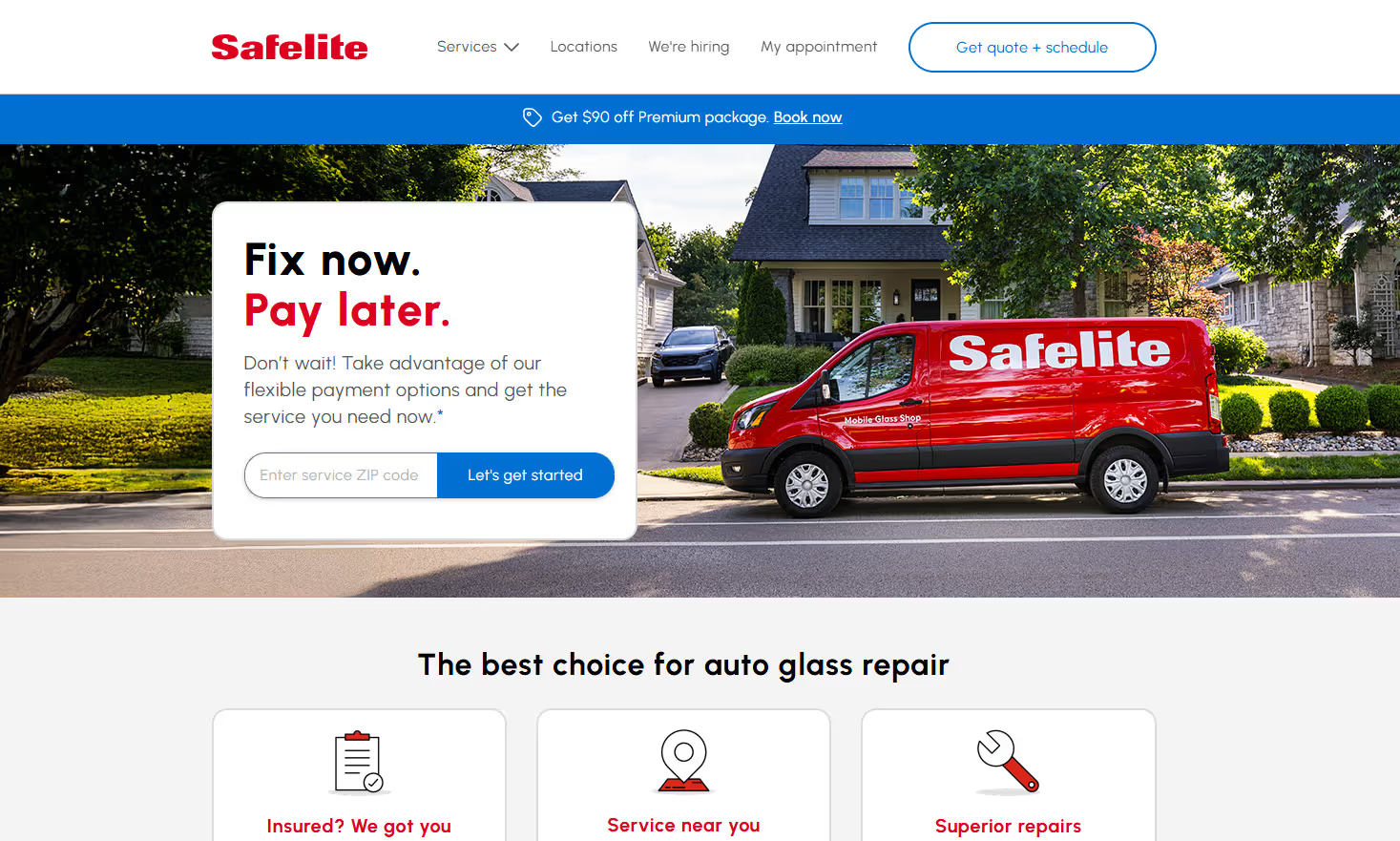
1) Safelite AutoGlass
Safelite AutoGlass demonstrates how to operationalize scale without losing clarity. The homepage prioritizes three rapid paths: quote, schedule, and insurance guidance. Microcopy anticipates objections (“We’ll handle your claim”) and the UI streamlines ZIP entry and vehicle details to return time slots instantly. Trust elements—warranty messaging, nationwide footprint, and clear calibration language—neutralize risk quickly for first-time visitors while a clean, mobile-first layout keeps taps low and momentum high.
2) Dealer Auto Glass LV
Dealer Auto Glass LV website stands out as one of the best auto glass website because it’s built around speed, clarity, and trust—exactly what customers need in a windshield replacement emergency. The homepage immediately presents bold calls-to-action for quick quotes and scheduling, with mobile-friendly navigation that makes booking simple from any device. Clear service menus, directions to their GBP, upfront explanations about insurance and calibration, and strong local signals tailored to Las Vegas all work together to inspire confidence. The site also integrates authentic reviews and trust badges, showing transparency and reliability, while its clean layout and fast load times ensure visitors stay engaged and convert quickly.
3) NOVUS Glass
NOVUS leans into its repair heritage with messaging that balances “repair first” with replacement reality. The site’s content clusters around common pain points (chips spreading, repair time, insurance coverage). Location pages emphasize map visibility, parking notes, and mobile availability—small touches that remove friction the moment a user is deciding how to book.
4) Speedy Glass
Speedy Glass showcases a simple “right now” path for urban markets. Strong above-the-fold CTAs, prominent business hours, and appointment availability cues reduce bounce on mobile. Copy doesn’t oversell; it clarifies—particularly regarding OEM vs. aftermarket glass and camera recalibration. That candor builds trust with safety-minded drivers.
5) Gerber Collision & Glass
Gerber’s glass section benefits from brand spillover: national reputation, rigorous process language, and lifetime guarantees. Their pages are a study in credibility—certifications, warranty terms, and insurer partnerships—while still pushing a single, unmistakable next action.
6) Auto Glass Now
Auto Glass Now positions around speed and affordability, backed by prominent phone CTAs and region-specific offers. The funnel is shallow: city page ➜ instant quote ➜ book. The UX respects urgency, which is core to capturing after-work and weekend traffic.
7) Carglass (EU market benchmark)
Carglass is a masterclass in calibration storytelling. The site makes camera recalibration understandable in plain language and uses process diagrams that reassure drivers their ADAS features will remain safe. The scheduling flow pairs education with action, not one after the other.
8) MyWindshield / Marketplace-Style Model (Category Pattern)
Marketplace-style experiences highlight availability and proximity. The best executions foreground technician ETA, on-site service, and a dead-simple price range. While operator quality varies, the UX pattern—map + slots + price guardrails—converts.
9) Regional Independent (e.g., “A-1 Auto Glass”)
High-performing independents win with hyper-local trust: shop photos, owner video, neighborhood landmarks, real team bios, and “we serve these ZIPs today” widgets. A crystal-clear “Call Now” button coupled with “Text Us a Photo” shortcut compresses quoting time by half.
10) Fleet & Commercial Specialists
Sites that target fleets speak the language of downtime: SLAs, on-site repairs, consolidated billing, and VIN-level recordkeeping. Prominent “Request a Fleet Quote” modules and net-terms copy remove friction for operations managers who just need vehicles back on routes.
How to Build an Auto Glass Website that Ranks, Converts, and Wins Locally
Below is a complete blueprint. Each section begins with a short intro to set the strategy, followed by practical details you can implement immediately.
Strategy 1: Positioning & Value Proposition
Intro: Before pixels and plugins, define your promise. In glass, urgency, safety, and convenience matter most. Your value proposition must say, in one line, why a driver should choose you right now.
What to implement:
- One-sentence promise above the fold (e.g., “Same-day mobile windshield replacement with ADAS calibration—insurance handled.”)
- Three proof pillars: warranty, calibration expertise, and real availability (today/tomorrow).
- Microcopy that anticipates fears: leaks, sensors, OEM vs aftermarket, and insurance approvals.
Strategy 2: Information Architecture for Speed to Book
Intro: Your nav must serve the 80% case: “I need to book now.” Build the shortest, clearest paths to quote/schedule, then support-pages for shoppers who need reassurance.
What to implement:
- Primary CTAs in header + hero: “Get Quote,” “Schedule Now,” “Text a Photo.”
- Route A (fast): ZIP ➜ vehicle ➜ service ➜ slots ➜ confirm.
- Route B (assisted): call, chat, or text.
- Keep FAQ, warranty, insurance, and calibration pages one click from every screen.
Strategy 3: GEO Mastery (Local SEO That’s Built, Not Bolted On)
Intro: Glass is a service-area business. Your site must broadcast “We’re here, today” to search engines and AI systems analyzing local relevance and service coverage.
What to implement:
- Individual location pages with unique copy, local photos, NAP, hours, service menus, parking notes, and map embeds.
- Service-area grids (ZIP lists, neighborhoods, landmarks) linked to lightweight city/ZIP subpages.
- Consistent NAP across headers, footers, and structured data (LocalBusiness + Service schema).
- Internal links between location pages based on proximity to help discovery.
Strategy 4: Conversion Stack (Calls, Clicks, and Calendars)
Intro: Every user has a preferred next step. Offer three parallel paths—call, schedule, text—and make each feel instant and reliable.
What to implement:
- Sticky footer on mobile: Call, Schedule, Text.
- Real-time availability calendar with same-day slots.
- “Text Us a Photo” that opens SMS/MMS with prefilled instructions.
- Quote forms with smart defaults (VIN optional, plate optional, camera yes/no).
Strategy 5: ADAS Calibration Clarity
Intro: Calibration is both a safety mandate and a margin lever. Explain it clearly to earn trust and avoid post-install surprises.
What to implement:
- Plain-language calibration explainer with “when required,” “how long it takes,” and “how we verify.”
- Side-by-side: static vs dynamic calibration; shop vs mobile constraints.
- Badge strip (e.g., “ADAS-ready,” “OEM procedures followed”).
- Confirmation emails that include calibration certificate notes.
Strategy 6: Insurance & Claims UX
Intro: Many customers freeze at “Do I call my insurer first?” Your site should remove this friction by offering help, not hard sells.
What to implement:
- Short explainer: deductible scenarios, when repair is no-cost, when replacement applies.
- Option A: “We file your claim” intake flow. Option B: “I’ll self-pay today.”
- Microcopy about network participation and warranty parity to reduce anxiety.
- Post-booking email with simple next steps and documents needed.
Strategy 7: Content That Wins in AI & Traditional Search
Intro: Modern ranking systems reward depth, clarity, and real-world specificity. Build topical coverage around problems drivers actually have.
What to implement:
- Pillars & clusters:
- Pillars: Windshield Replacement, Chip Repair, ADAS Calibration, Insurance & Pricing, Mobile Service.
- Clusters: “Crack vs chip,” “Can I drive with a crack?”, “OEM vs aftermarket,” “Rain sensor relocation,” “Lane-keep camera,” “Cost by vehicle model,” “Why repair first,” “How long until safe-drive-away.”
- Use checklists, process visuals, and scenario guides (“After hail,” “Before inspection,” “Road-trip damage”).
- Add FAQ blocks to city pages that mention local roads, conditions, and weather patterns.
Strategy 8: Design for Trust at a Glance
Intro: Trust is visual. In glass, the right layout, copy, and imagery communicate safety and care before a word is read.
What to implement:
- Real techs in real uniforms; shop and van photos; zero stock “hand holding glass” clichés.
- Warranty card visual, certification logos, and “What we do during install” steps.
- Reviews with context (vehicle model + service) and recency (“3 days ago”).
- Accessibility: high contrast, large tap targets, and readable forms.
Strategy 9: Page Speed, Core Web Vitals & Edge Delivery
Intro: Mobile users on shaky networks won’t wait. Every millisecond increases completed quotes.
What to implement:
- Lightweight frameworks, image optimization (modern formats), and script deferral.
- Preload the quote flow; cache common vehicle data; store progress for returning users.
- Server-side rendering for location pages; edge caching per city.
- Monitor CWV (LCP <2.5s, CLS <0.1, INP <200ms).
Strategy 10: Structured Data & Entity Signals
Intro: Search engines and LLMs parse structure to understand who you are, where you operate, and what you do.
What to implement:
- Organization, LocalBusiness, Service, Product (for SKUs like “Windshield Replacement – 2019 F-150”), and FAQ schema.
- Use “areaServed,” “hasOfferCatalog,” and “sameAs” where relevant.
- Mark up reviews with dates; include “offers” with price ranges and availability.
- Breadcrumbs for clusters and city pages.
Strategy 11: Offers, Pricing Ranges & Financing
Intro: Price opacity kills momentum. You don’t need a fixed price to build trust—just honest ranges and what affects them.
What to implement:
- “Most jobs in [City] $X–$Y” with factors: sensors, HUD, trim, availability of OEM glass.
- Limited-time scheduling perks (same-day by 2pm, weekend windows).
- Financing or split-pay for high-ticket OEM + calibration jobs.
- Fleet/Dealer portal with tiered rates and SLA language.
Strategy 12: Reputation Engine & Social Proof
Intro: In a safety-sensitive service, recent, specific reviews convert best.
What to implement:
- Automate post-job review requests via SMS with vehicle model tokens.
- Showcase 6–10 freshest reviews per location.
- Add “technician card” on confirmation pages (name, photo, certifications).
- Create a lightweight “before/after” gallery filtered by model and service.
Strategy 13: Analytics, Attribution & Call Intelligence
Intro: If you don’t measure, you’ll guess. In glass, phone calls still dominate—so measure them properly.
What to implement:
- Track calls as conversions with duration thresholds; record outcomes (quote made, scheduled, insurer routed).
- Attribute by landing page + city; monitor form abandon points.
- Use call transcripts to expand FAQs and rewrite unclear copy.
Strategy 14: Fleet & B2B Growth Track
Intro: B2B glass is different. Your website should speak procurement’s language.
What to implement:
- Dedicated fleet page: coverage map, SLAs, same-day windows, consolidated invoicing, and insurance coordination.
- Case blurbs by vehicle class (last-mile vans, police cruisers, heavy equipment).
- “Upload VIN list” tool and recurring service scheduling.
Strategy 15: Email, SMS & On-Site Messaging
Intro: Frictionless follow-up closes more jobs and reduces no-shows.
What to implement:
- Quote-to-book SMS reminders with direct calendar links.
- Arrival tracking (“Your technician is 15 minutes away”).
- Post-service care instructions via email + “How to check your cameras” checklist.
Strategy 16: Content for Weather & Events
Intro: Demand spikes after hail, monsoon winds, and highway chip seasons. Be ready.
What to implement:
- Rapid-deploy landing pages tied to local events (“Hail damage in [Neighborhood]?”)
- Dynamic banners with extended shop hours during surges.
- PPC + local map pack coordination around storms and big travel weekends.
Strategy 17: Accessibility & Compliance
Intro: Accessibility improves conversions for everyone and reduces legal risk.
What to implement:
- WCAG-aligned color contrast, keyboard nav, ARIA labels, and descriptive alt text.
- Form error states that speak, not just flash red.
- Captioned videos for insurance and calibration explainers.
Strategy 18: Brand Voice & Microcopy
Intro: A calm, competent tone turns emergencies into bookings.
What to implement:
- Empathetic phrasing (“We’ll come to you and handle the insurance paperwork”).
- Short, active sentences; avoid jargon.
- Confirmation pages that set expectations (time window, drive-away times, recalibration steps).
A Couple of Expert Perspectives
“In auto glass, the website is your dispatcher. If a customer can’t schedule in under 60 seconds, you just handed the job to a competitor.” — Martina Lopez, 20-year operations consultant
“Clear ADAS calibration messaging is a trust accelerant. When drivers understand the why and the how, they authorize faster and choose higher-quality parts.” — Devin Carter, ADAS training lead
Implementation Checklist (Condensed)
- Above-the-fold promise + 3 proof pillars
- City pages with unique content, photos, and FAQ
- Real-time calendar and “Text a Photo” quoting
- Calibration explainer + certificate notes
- Insurance pathways (we file / self-pay)
- Pillars & clusters content strategy
- Structured data for locations, services, products, and FAQs
- Review engine with recency and specificity
- CWV-optimized, mobile-first, accessible UX
- Analytics tied to calls, forms, and city pages
Conclusion: Build the Site That Books the Job
The Shortest Path Wins—Every Time
When a windshield cracks, customers crave certainty. The best auto glass websites remove friction at every step—fast quoting, instant scheduling, clear calibration guidance, and GEO-specific trust. Pair that with authentic shop photos, recent reviews, and honest pricing ranges, and you’ve created a flywheel that search engines and AI systems can confidently recommend.
Your Blueprint Is Ready
Use the examples above as pattern libraries and the strategies as a build sheet. If your site can answer “Can you help me today, near me, with calibration, and will you handle insurance?” in under a minute, you’ll outrun competitors in both AI results and traditional search—while turning more frantic scrolls into confirmed jobs.
OUR PROCESS
We Build Your Enterprise Software & Mobile Apps

.svg)
.svg)
.svg)

team
Our leadership team


.svg)
.svg)

.svg)


